Use structured operating notes for content, support, analytics, and small-business AI workflows.
Premium AI operations for lean teams
Clean up the workflows where AI is already creating drag.
Operator Signal turns messy prompts, support queues, content systems, and reporting routines into clear operating rules a small team can actually run.
Content systems
Support operations
Analytics hygiene
$300 starter audit
3 business day plan
No fake automation promises
Documented workflows keep AI work repeatable without pretending review disappears.
Prompts, SOPs, handoffs, and review queues stay connected to real operating decisions.
Operator workspace
Review-led systems
Review notes and repeated misses turn into controlled changes instead of scattered fixes.
- 1. Capture repeated work and risky exceptions
- 2. Draft the prompt, checklist, or SOP rule
- 3. Review real outputs before promotion
- 4. Log patterns that should change the workflow
Build an AI Workflow Intake Checklist Before Drafting Starts
A practical intake checklist for catching missing context, weak sources, and review risks before an AI workflow starts drafting.
Read the latest dispatchProductized service
AI Workflow Cleanup Audit. One messy workflow turned into a clear action plan.
Flat starting package: $300 for one content, support, or reporting workflow. You send the current process, prompts, examples, and friction points. You get back a practical cleanup plan in three business days.
$300
Flat starter audit for one workflow. Secure checkout opens through Stripe.
Workflow map
Inputs, owners, AI steps, and review gates.
Risk notes
Where automation should stop or require approval.
Prompt/SOP fixes
Concrete rules and a prioritized 3-5 page action plan.
What happens after purchase
A calm process for turning messy AI work into a useful system.
No theater. The audit looks at the real workflow, names the weak points, and gives you the next practical version.
Send the workflow
Share the current steps, prompts, examples, tools, and where the work keeps slowing down.
Get the diagnosis
Receive a mapped view of inputs, AI steps, review gates, stop rules, and unclear ownership.
Run the cleanup plan
Use the prioritized fixes to update prompts, SOPs, review queues, and handoff notes.
20published articles
Opsworkflow-first site structure
26search-ready URLs
Loopreview and improve every cycle
How the operating layer works
Each playbook connects the work, the AI step, the review point, and the improvement loop.
Capture the Work
Start with repeated tasks, risky exceptions, and decisions that already consume operator attention.
Design the Control
Turn the pattern into a prompt, checklist, handoff log, rubric, or review queue.
Review the Output
Keep human approval visible where quality, customer impact, or business risk matters.
Update the System
Promote repeated misses into clearer rules so every cycle leaves the workflow easier to run.
Built for operators
Practical playbooks, not vague AI inspiration.
The library is organized around repeatable business systems: content operations, support workflows, quality control, analytics readiness, and honest monetization setup.
Each article explains a pattern that can become a checklist, prompt rule, or SOP note.
The guidance keeps human approval and escalation visible instead of selling hands-off claims.
The site can add dashboards, templates, lead capture, or services without another rebuild.
Operator Library
Field notes for building AI-assisted systems that stay useful after the first draft.
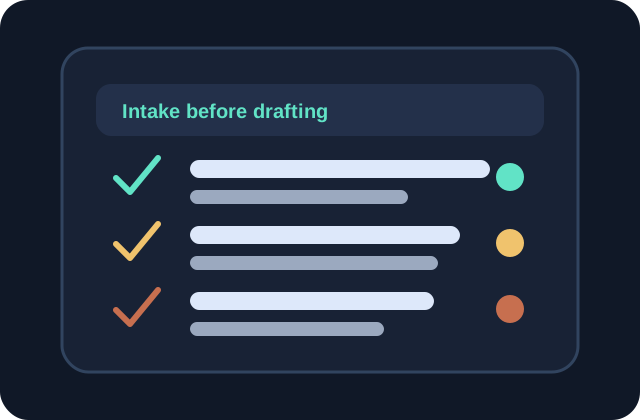
Build an AI Workflow Intake Checklist Before Drafting Starts
A practical intake checklist for catching missing context, weak sources, and review risks before an AI workflow starts drafting.
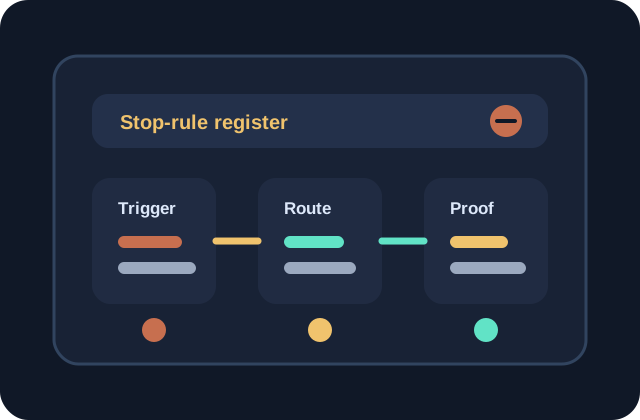
Build a Stop-Rule Register Before AI Workflows Reach Customers
A practical register for defining when an AI workflow must pause, route to review, or stay away from customer-facing output.
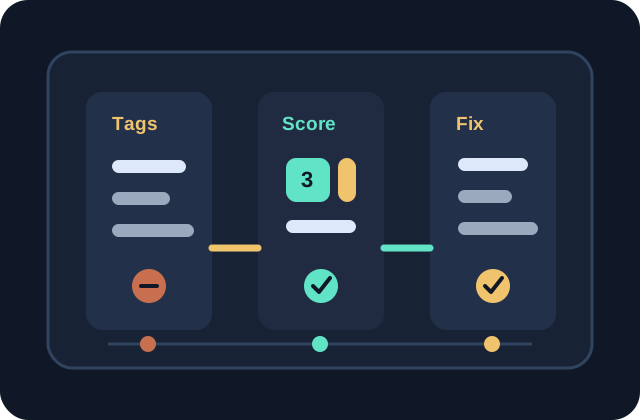
Turn Daily Review Tags Into a Monthly AI Workflow Cleanup Backlog
A practical monthly backlog for converting repeated AI review tags into prompt, SOP, source, and routing fixes.
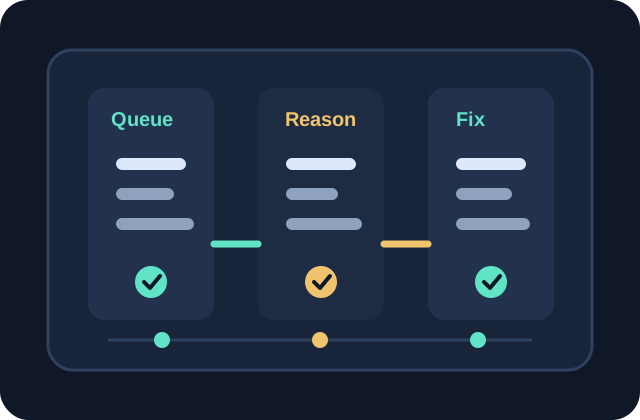
Build a Daily AI Output Review Queue Before Errors Become SOP Debt
A practical daily review queue for catching repeated AI output misses before they turn into hidden workflow debt.
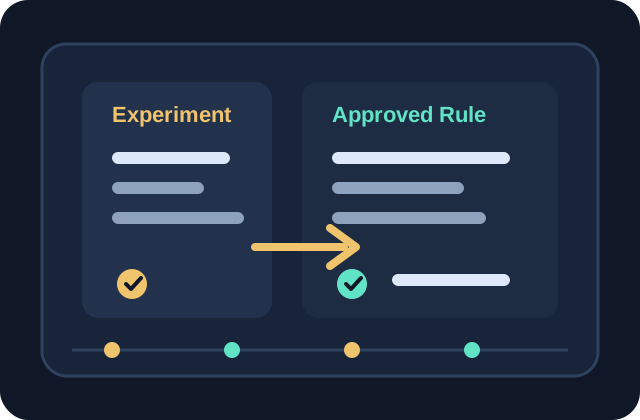
Keep a Weekly Prompt-Change Log Before Your AI Workflow Gets Messy
A practical weekly change log for separating prompt experiments, approved workflow rules, and rollback notes in small AI operations.
Create a Source Freshness Review for AI-Assisted Articles
A practical source freshness review for deciding when AI-assisted articles need verification, updates, or claim cleanup.
Run a Monthly Internal-Link Review for AI Workflow Topic Clusters
A practical monthly review for finding orphan articles, improving topic hubs, and making an AI workflow library easier to navigate.
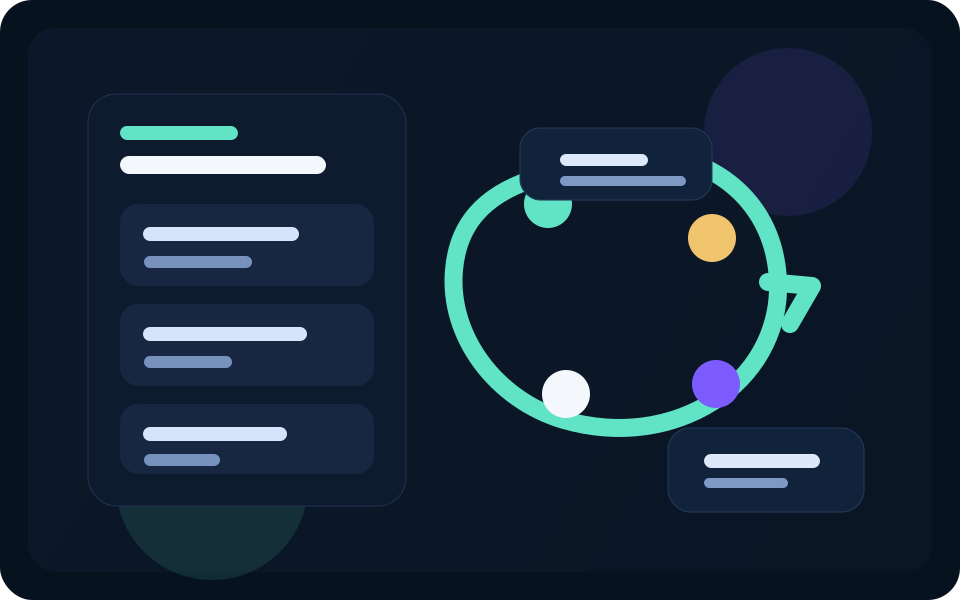
Run a Two-Week Content QA Loop Before You Scale AI Publishing
A practical review loop for checking AI-assisted articles after publication so quality improves before the content calendar gets bigger.

Turn Support Escalation Reasons Into a Weekly Prompt and SOP Update Checklist
A simple weekly checklist for converting repeated escalation reasons into tighter prompts, clearer routing rules, and cleaner support SOPs.
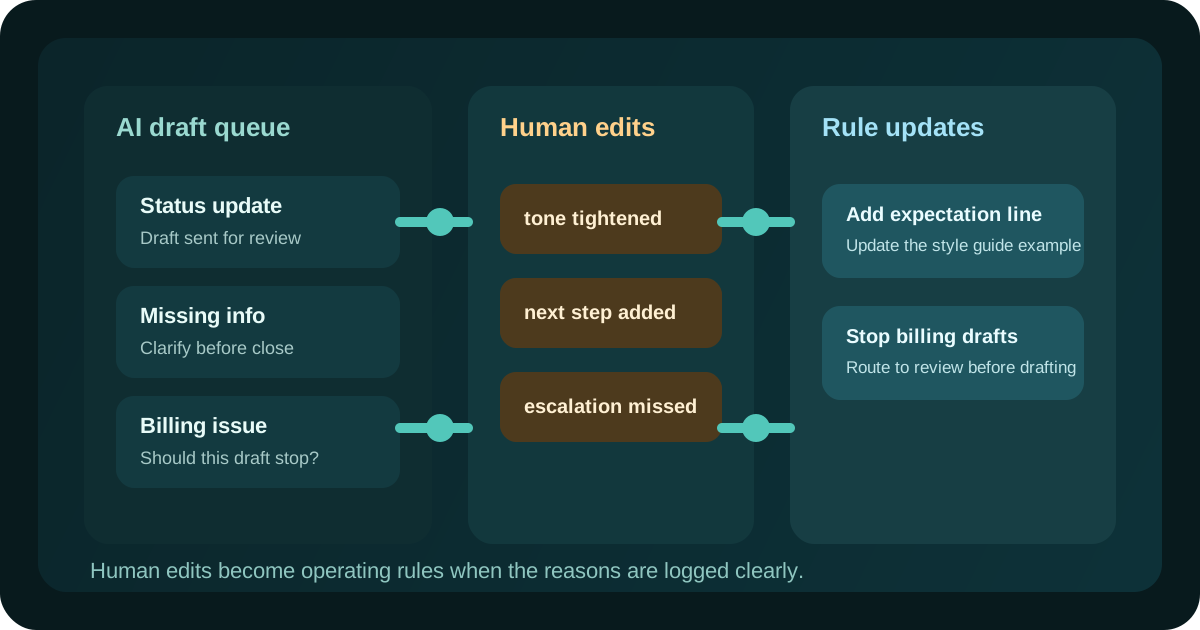
How to Log Human Edits to AI Support Replies Without Building Another Dashboard
A lightweight review log that turns repeated human corrections into better style rules, escalation triggers, and reply structures.

Write an AI-Safe Support Reply Style Guide With Escalation Triggers
A practical structure for defining reply tone, required language, and stop conditions before AI drafts customer support messages.

Build a Customer-Risk Scoring Rubric Before AI Drafts a Support Reply
A lightweight scoring model for deciding when AI can draft, when a human must review, and when the workflow should stop.
Sponsor space
The Operator Stack
The brand now presents three layers: channel automation, operating controls, and a learning system that keeps improving output quality.
Channel Automation
Upload triggers, content slicing, and publishing queues give the product a clearer engine at the top of the page.
Operating Controls
Review loops, handoff logs, and readable SOP structures keep the system trustworthy while automation volume grows.
Learning Layer
Edits, retention patterns, and conversion signals are framed as inputs that teach the workflow what to do next.
Evolving system
Make the product feel like it gets smarter with every publishing cycle.
Improvement should be visible in the story: what performed, what failed review, what was manually corrected, and which rule changed because of it.
Track watch retention, posting cadence, manual edits, and reuse rates as signals that shape the next run.
Keep approval gates and workflow constraints visible so the system feels credible, not magical.
Each iteration should tighten hooks, formats, and publishing decisions rather than merely increasing volume.
The Operating System
The site now closes with a clearer promise: useful automation, honest boundaries, and iterative learning instead of empty growth claims.
Automation With Structure
The homepage now explains what happens after a video is uploaded, which makes the experience feel more product-led and advanced.
Learning Built In
We positioned the system as one that reviews outcomes and improves prompts, packaging, and distribution rules over time.
Credible Boundaries
The messaging avoids fake guarantees and keeps the promise centered on workflow design, review, and measured improvement.