Run a Two-Week Content QA Loop Before You Scale AI Publishing
A polished AI-assisted draft is not enough evidence to expand the calendar. A two-week QA loop helps small teams review live articles, catch recurring quality gaps, and feed those patterns back into the brief before publishing volume becomes the priority.
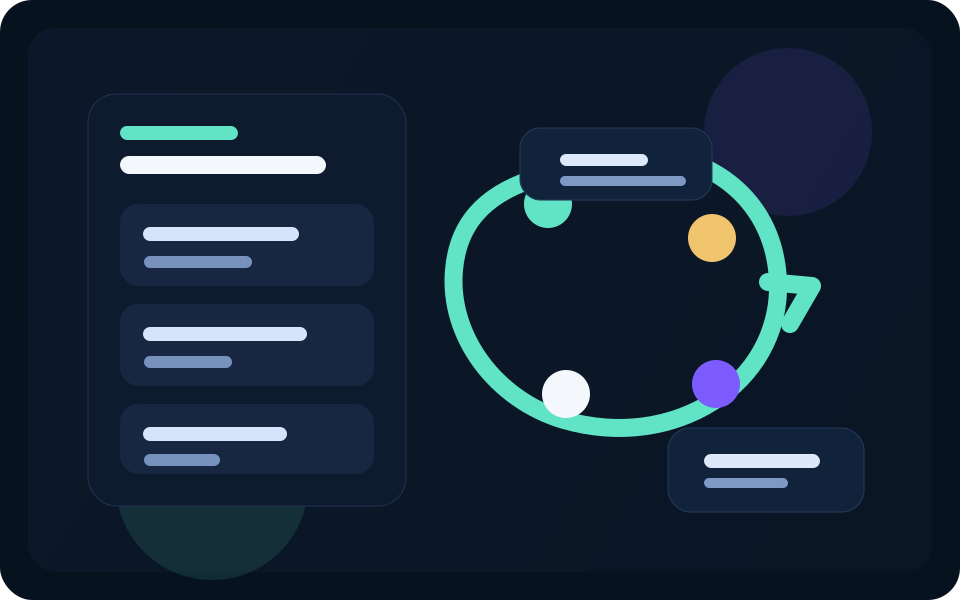
Review AI-assisted posts after publication, not only before launch.
Separate factual fixes, structure fixes, and usefulness fixes.
Turn repeated QA notes into a tighter brief before scaling output.
Do not scale from the first clean draft
A polished draft is not proof that an AI-assisted publishing system is ready to scale. The real test is whether the article still feels useful after it has lived on the site for a week or two. A two-week QA loop gives a small team enough distance to catch thin sections, missing examples, unclear internal links, and promises that sounded stronger in draft than they do on the live page. This keeps the publishing habit honest before volume becomes the goal.
Review the live article in three passes
Use three short passes instead of one vague quality review. First, check factual and policy risk: unsupported claims, stale tool references, overconfident language, and anything that should point readers to a qualified professional. Second, check structure: whether the title matches the article, whether each section advances the idea, and whether the summary sets the right expectation. Third, check usefulness: whether a reader can take one practical action after reading. These passes make QA faster because each pass has a different job.
Log the fix type, not just the typo
A useful QA log should capture the pattern behind each change. Put every note into a small set of fix types: fact check, claim softening, example needed, structure gap, internal link, unclear next step, or remove filler. The exact wording matters less than consistency. After ten to twenty articles, those labels reveal whether the publishing system has a recurring weakness. Maybe every post needs a stronger operating example. Maybe titles are outrunning the body. Maybe the review step keeps catching the same unsupported phrase.
Feed the patterns back into the brief
The QA loop only compounds when repeated notes change the next assignment. If example needed appears often, update the article brief to require one real workflow example per section. If claim softening keeps appearing, add a rule that every strong outcome statement must name its limits. If internal link notes are frequent, add a related-reading prompt to the publishing checklist. The goal is not to create a bigger review burden. The goal is to make the next draft start closer to the standard.
Scale only after the misses get boring
The signal that a content system is ready for more volume is not a perfect article. It is a boring QA review: fewer repeated fixes, clearer briefs, and no scramble to repair basic structure after publication. Until then, keep the cadence modest and improve the loop. Small teams win by publishing work that can survive a second look, not by pushing more AI-assisted pages into the archive before the operating system is ready.