Build an AI Workflow Intake Checklist Before Drafting Starts
AI workflows work better when the team checks the request before asking for a draft. A short intake checklist catches missing context, weak sources, and review risks early.
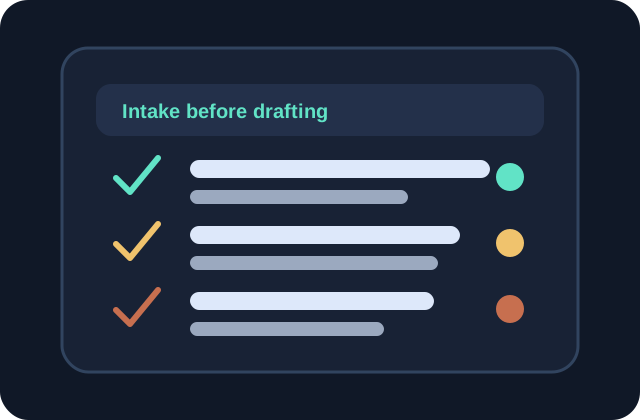
Check the input before improving the prompt so bad context does not become polished output.
Use required fields, risk flags, and source notes to decide whether drafting should start.
Review failed drafts by intake gap so the checklist improves instead of only the prompt.
Fix the input before blaming the draft
When an AI-assisted workflow produces a weak reply, summary, brief, or report, the team often rewrites the prompt first. Sometimes that helps. Often the real problem is that the work entered the drafting step without enough context. An intake checklist puts a small quality gate in front of the AI step. It asks whether the request is complete enough, clear enough, and safe enough to draft before anyone spends time editing a polished but misdirected output.
Define the minimum useful context
The checklist should name the few fields that every good draft depends on. For support work, that might be customer goal, account status, product area, prior conversation, and the allowed next action. For content work, it might be audience, angle, source notes, offer, and publishing constraint. Keep the list short enough that people will use it. A required field is only useful when missing it would materially change the draft, the routing decision, or the review standard.
Add risk flags before the prompt runs
Intake should also decide whether the case belongs in the AI step at all. Add plain-language flags such as money involved, angry customer, account access, policy exception, public claim, missing source, conflicting instructions, or owner unclear. Each flag should point to a next action: continue, collect more context, require review, or stop and hand off. This makes risk visible before the model turns incomplete material into confident language.
Keep source notes attached to the request
Many drafting failures come from source drift. The person asking for a draft remembers where the fact came from, but the AI step only receives a vague instruction. The intake checklist should include a small source note: approved macro, product page, internal policy, recent customer record, meeting note, or firsthand observation. If the source is not available or current enough for the task, the workflow should pause for confirmation instead of asking the model to fill the gap.
Review failures by intake gap
After a draft needs heavy correction, do not only ask what the prompt missed. Ask what the intake checklist failed to catch. Was the audience unclear? Was the owner missing? Did the source conflict with the requested outcome? Did the risk flag appear too late? Logging failures by intake gap turns messy review notes into better required fields, clearer routing, and fewer avoidable rewrites. Over time, the checklist becomes the front door that keeps the workflow from accepting work it cannot handle well.