The 3-Level Escalation Map for AI-Assisted Support Teams
A simple escalation model that helps small teams decide what AI can draft, what humans should review, and what must stop immediately.
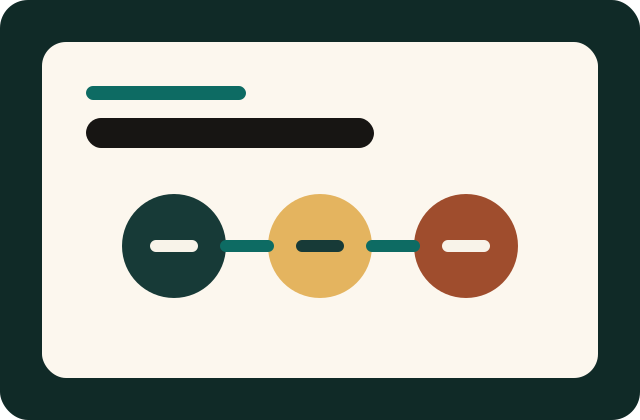
Use three levels so teams know what AI can answer and what must stop.
Define risk triggers before volume grows.
Escalation quality matters more than reply speed in sensitive cases.
Level one should be safe and repeatable
Level one is for low-risk support work: common onboarding questions, standard account help, straightforward how-to requests, and requests for missing information. This is where AI drafting can be genuinely useful because the answers are frequent, structured, and easy to review.
Level two requires human approval before sending
Level two includes work where AI can still help but should not decide alone: unusual billing issues, customer frustration, plan changes, and cases where the context is incomplete. The goal at this level is to use AI for speed while preserving a human checkpoint before anything reaches the customer.
Level three should force a stop
Level three is the hard boundary. Security concerns, legal issues, threats, refund disputes, harassment, and anything involving account access should trigger an immediate stop and handoff. The workflow should not hope a better prompt will handle those moments. It should route them to a person by design.
Write the triggers where the team can see them
An escalation map only works if it lives outside one person’s memory. Put the triggers in the SOP, the macro library notes, and the triage instructions so the rule is visible at the moment the work happens.
Review where the map fails
If level-one tickets keep becoming level-two cleanups, the map is too optimistic. If level-three issues are discovered too late, the routing criteria are too weak. Reviewing those failures is what turns a simple escalation map into a reliable support system.